Release what no longer serves you, align your thoughts with new possibilities, and walk into your transformed self
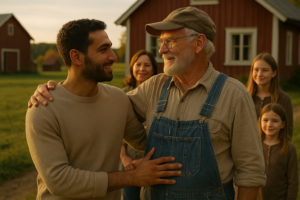
Ilpo and Arbaz

Ilpo and Arbaz
Building Trust and Community
By Karl Balloch
Here’s a short story for you.
A story about hardship, kindness—and the power of gratitude.
Once upon a time, a young man named Arbaz was living a prosperous life in his native country. Suddenly, an old civil war broke out in his entire country. And everyone was worried about their lives. War and severe hardships forced him and millions of other people to flee from their country. So he became a refugee. He spent many days walking through deserts, forests and seas in search of a peaceful place to live. He was one of the few fortunate people who could enter a peaceful country. His other companions continued their journey to big cities, but Arbaz sat down at the door of a farmhouse within the borders of this new country. The next morning, Arbaz met the head of this house and family, Ilpo, who was a humble and compassionate farmer. Ilpo was overwhelmed by compassion and mercy after having a look at Arbaz’s shattered condition. Arbaz tries speaking a sign language to explain his miseries. Ilpo downloaded a translation app to understand his situation. After understanding his predicaments of Arbaz, Ilpo emotionally said: “You are welcome here. Welcome to our home. “Rest, eat and be safe here.” Ilpo added that our community is based on mutual care, trust and respect, based on human values. Ilpo, without hesitation and wasting a minute, got the consent of his family to offer him a place to stay and have other necessities. Time passed quickly, and Arbaz became part of his family, not a burden. Over the years, Arbaz has regained his stability. He learned local language and farm skills from Ilpo. He was independent, self-sufficient and free. But Arbaz was having an emotional conflict in his inner being, and facing a crucial decision at this point. Would he stand by the people who supported him and protected him? Not just by accepting their kindness, but by living up to their values? Or would he forsake, criticize their lifestyle, social etiquette, and without giving anything back? In the end, Arbaz listened to his heart. He stood with the farmer, defended their home, and spoke well of the land that welcomed him. He shared the host nation’s sentiments, and supported the international policies of the host country. He gave back—not because he had to, but because he understood something important: when someone saves you, you don’t walk away and forget. You walk forward in loyalty.
Release what no longer serves you, align your thoughts with new possibilities, and walk into your transformed self